Coco Coir Dog Toys: What Retailers and Private-Label Brands Should Know Before Sourcing
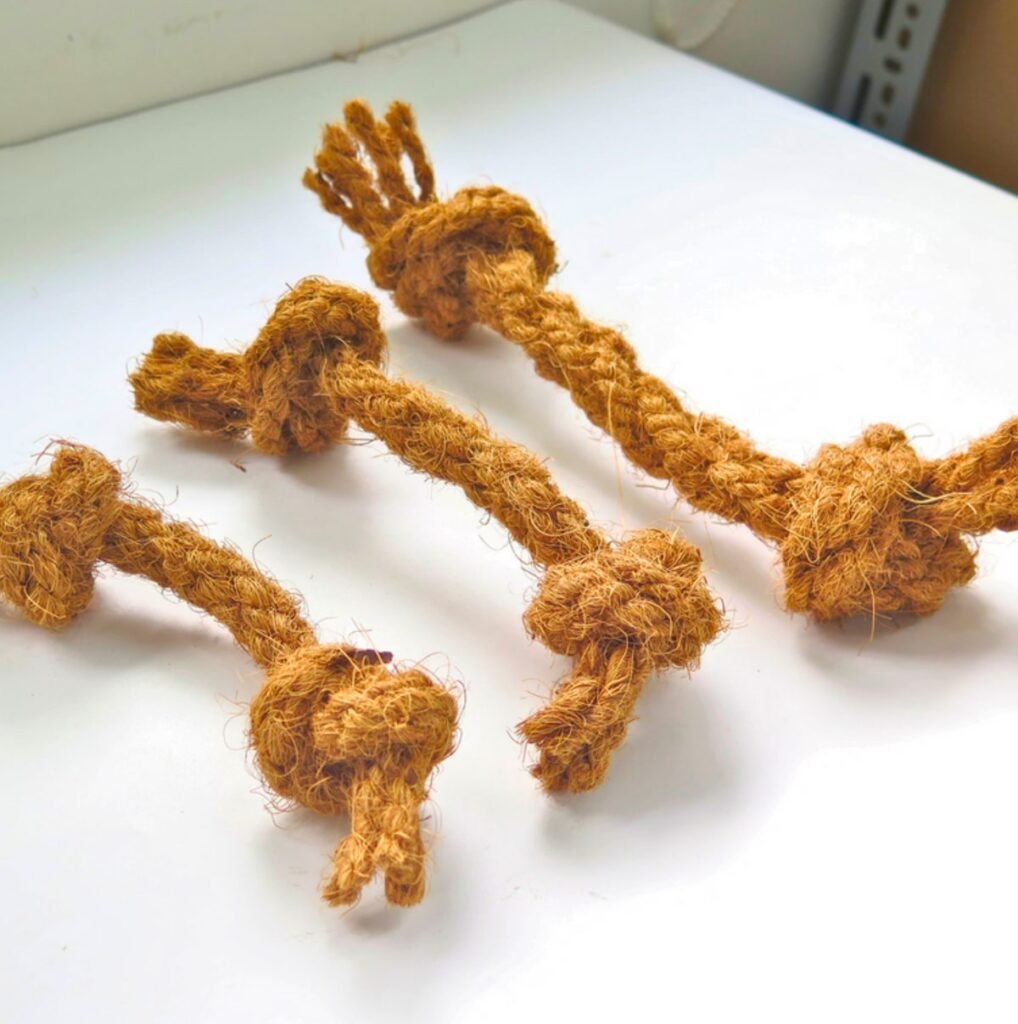
“Coco coir” appears in more and more pet toy listings, but a buyer searching for it rarely finds a plain description of what the material is or how it becomes a toy. This is that description, for retailers, Amazon sellers and private-label brands: the material, the construction, the sizes, and the wording we do and don’t use about it.
What Coco Coir Is
Coir is the fibre from coconut husk. For our toys it comes from whole coconut husks in the western provinces of Vietnam. It is a plant fibre, not a synthetic one — the same family of material long used for rope and matting.
How the Toy Is Made
Each toy goes through four steps: the husk is separated, treated with a natural accelerator, single-twist spun into yarn, and then hand-braided into shape by skilled workers. No glue, binders or synthetic adhesives are used at any stage — the shape holds because of the braid.
The Two Shapes
| Product | Size | Dimensions | Weight |
|---|---|---|---|
| Coco Coir Ball Chew — CCRB01 | S | 4–6cm diameter | 15–20g |
| M | 6–8cm diameter | 30–40g | |
| L | 8–10cm diameter | 65–75g | |
| Coco Coir Chew Toy (bone shape) — CCR01 | S | 20cm long, ø1.5–2cm | 16–20g |
| M | 23cm long, ø1.5–2cm | 25–30g | |
| L | 30cm long, ø2–2.5cm | 55–60g |
See the full range and photos on the Coconut Fiber page.
What to Ask Any Coir Supplier
- What exactly holds the shape? We use braiding only, with no glue, binders or synthetic adhesives. Ask every supplier the same question and get the answer in writing.
- Are size and weight given per size grade? Ours are listed above per size, so you can build a size assortment from the table.
- Which paperwork ships with the container? Ours: Certificate of Origin (CO, Form B, VCCI Ho Chi Minh City), Fumigation Certificate and Phytosanitary Certificate. We declare coconut coir products under HS code 5305.00.22.
- Which environmental words does the spec sheet or packaging use — and what test report stands behind each one? This matters more than it used to; see below.
What We Don’t Claim
We describe the material and how it is made. We do not print “biodegradable” or “eco-friendly” on this product, because we have not run testing that would support those words. If you resell into the EU, rules on environmental claims in consumer marketing changed on 27 September 2026 — we explain what changed in Green Claims on Pet Product Listings. The practical advice: describe the material (“made from coconut husk fibre, hand-braided, no glue or synthetic adhesives”) rather than borrowing a general environmental word from a supplier.
Ordering
- Minimum order: 50 pieces per item code, including logo engraving for your brand; printed private-label packaging from 500 pieces.
- Samples: three product samples at no charge; courier charges apply. Sample availability and preparation time are confirmed with your request.
- Private label: your branding on both shapes — see Service for OEM/ODM terms.
Frequently Asked Questions
Is any glue or synthetic adhesive used?
No. The fibre is single-twist spun and hand-braided; no glue, binders or synthetic adhesives are used at any stage.
What sizes are available?
Ball (CCRB01): S, M, L, 4–10cm diameter. Chew (CCR01): S, M, L, 20–30cm long. Weights are in the table above.
Can I order under my own brand?
Yes. Stock orders and logo-engraved private label start at 50 pieces; printed private-label packaging starts at 500.
What HS code do you declare?
5305.00.22 for coconut coir products.
Want to see the coir toys in your hands? Request samples and wholesale pricing — three product samples at no charge (courier paid by buyer).
Want the details behind this post?
Three product samples at no charge; courier charges apply. Sample availability and preparation time confirmed with your request. We reply with pricing and lead time, usually the same working day.
Request Wholesale Quote